
Claude Design: How to Create a Design System Without a Designer
Most entrepreneurs don't employ a designer and don't have a Figma license that someone can use. Yet, new things constantly need to be created: a landing page, a pitch deck, a mockup of that one idea, a set of social posts. The result is well-known. Each component looks slightly different because each time someone starts guessing anew. What was that shade of blue again? How big were the headings? Where is the logo?
Since April 2026, a serious solution has been on the table: Claude Design. A tool from Anthropic, the company behind Claude, that allows you to create visual work via chat. Designs, prototypes, slides, one-pagers. You describe what you need, and Claude builds a first version. Then you refine it via chat, inline comments, direct edits, or sliders that Claude creates for you. No lengthy training required.
But the real power isn't in that one beautiful screen. It lies in something most people overlook: the underlying design system.
A Design System is Your Blueprint, Not Your Photograph
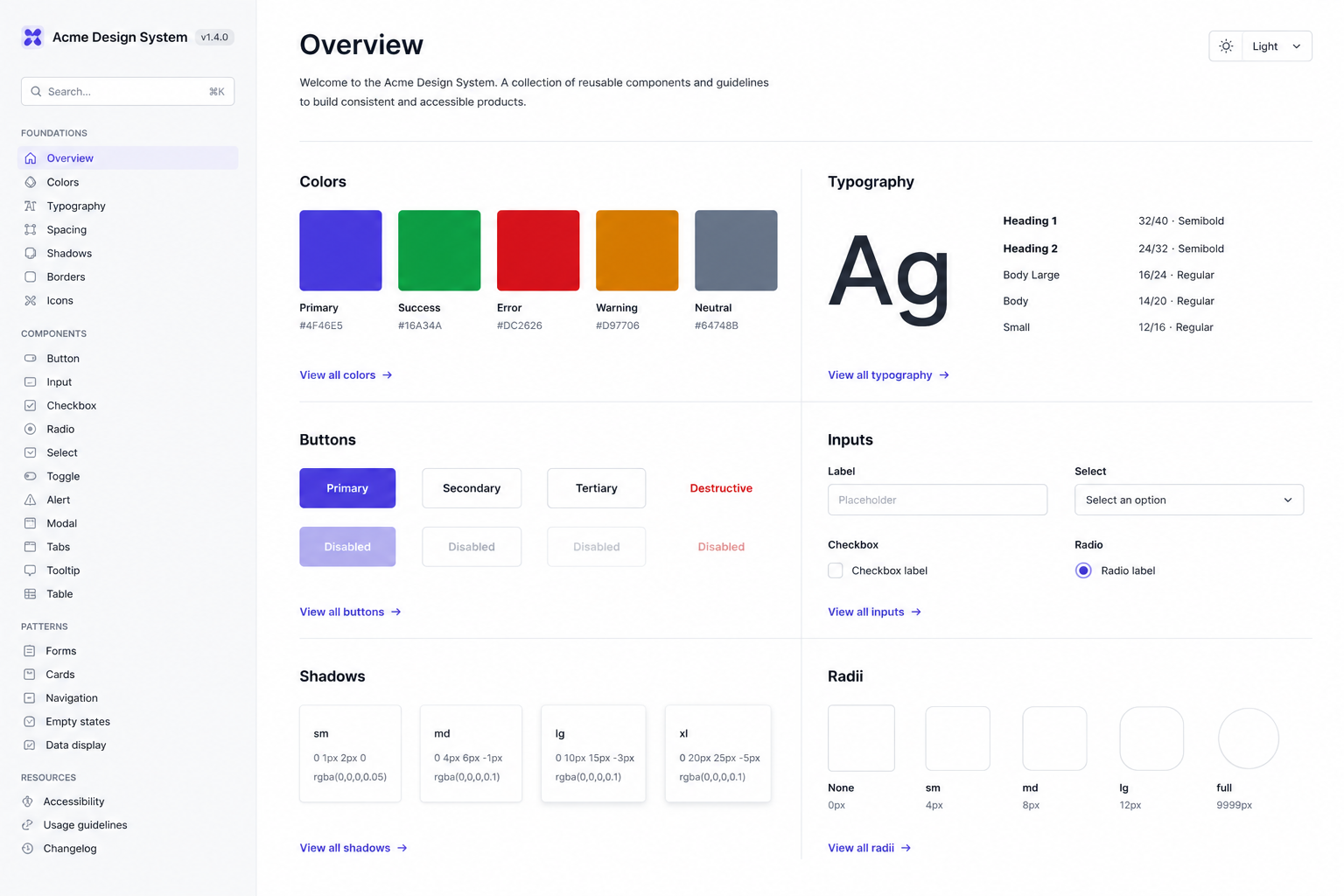
Think of a logo and a few colors as a photograph of your brand. Beautiful, but as soon as you create something new, you're guessing again. A design system is the blueprint. It defines the rules: the exact color codes, the typographic scale, spacing, button shapes, what is and isn't allowed.
That sounds like something for large agencies, but for SMBs, it’s precisely the difference between amateurish and professional. Consistency builds trust. If your website, your quote, your LinkedIn, and your presentation all align, a customer will feel within a second: this person values appearance, consistency, and details. If everything is slightly off, your brand communicates the opposite, even if no one can precisely articulate why.
Companies often think they need a logo and a color palette, when they actually need a design system. A logo solves one problem. A design system solves every future problem because everyone who creates something works from the same rules.
What Claude Design Does Smartly
The beauty of Claude Design is that you can use it not only to create web designs but also a real design system. Every subsequent project automatically uses your colors, typography, and components. You don't have to manually monitor it; the system is the source, and everything you create with it remains consistently aligned.
You can start in various ways: from a text prompt, by uploading documents (Word, PowerPoint, Excel), or by letting Claude analyze your website so a prototype looks like your actual product. Then you refine it with fine-grained controls and share it within your organization. Export options include Canva, PDF, PowerPoint, or standalone HTML.
Who is this for? Anthropic explicitly positions it for people who don't start from a design tool: entrepreneurs, product managers, and marketers with an idea but without a design background. It's not a replacement for a good designer, but it significantly raises the baseline of what you can create yourself.
Self-Limitation Remains the Art
A word of caution, because a tool makes it easy, not automatically good. The temptation with any design tool is to add too much. Five colors competing for attention, glossy effects, clutter. Leaving something out requires more courage than adding something, but it's precisely that simplicity that makes a brand feel serious and reliable. A design system helps with this because it forces you to make choices upfront instead of per screen. The rules protect you from yourself.
Bonus: Integration with Claude Code
And now for the part where it gets really interesting for us. A design completed in Claude Design doesn't stay there. Claude bundles everything into a handoff package that you pass to Claude Code, the tool we use to build websites, webshops, and business applications, with one instruction. The design system, components, and design intent are all included. Claude Code then builds the working version in precisely the right style, without me having to re-explain what the brand is for each page.
That's the difference between four days and four weeks. The design and construction speak the same language, so nothing is lost in the transfer, and there are no endless correction rounds. Once the system is properly defined, everything that comes after, whether built by a human or by AI, remains consistent.
Therein lies the real gain for most SMBs. Not just a more beautiful brand, but a brand that scales itself as soon as you use AI to build faster. Do you want to know what a design system would look like for your company, and how to get it from design to a working website with tools like Claude Design and Claude Code? Schedule a meeting.