
Lovable vs Claude Code — which do you choose for your vibe coding project?
Last month, a board member from a wholesaler in Brabant asked: "You talk about both Lovable and Claude Code as AI tools. What's the difference, and which one should I choose to build a portal with?"
The honest short answer: that's the wrong question.
Lovable and Claude Code are not competitors. They solve different problems at different stages of the same project. Approaching them as "just pick one" misses the entire point. Below, I'll explain the fundamental differences, when to use which, and why most serious AI builders use both daily.
The Fundamental Differences
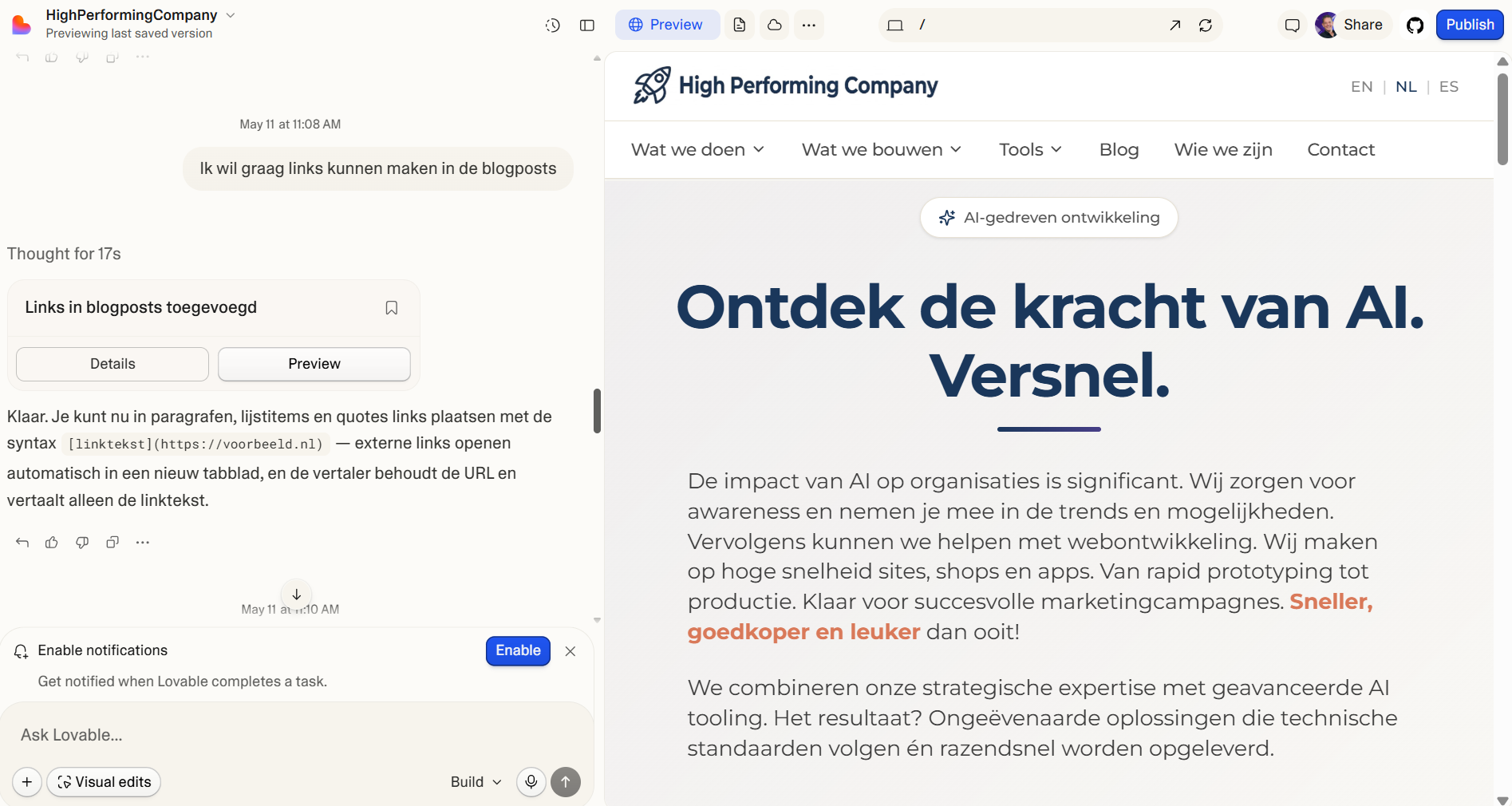
Lovable is AI in a browser-based interface. You type what you want, see a working app in seconds, click around, request adjustments, and see them reflected immediately. The graphical interface is the product.
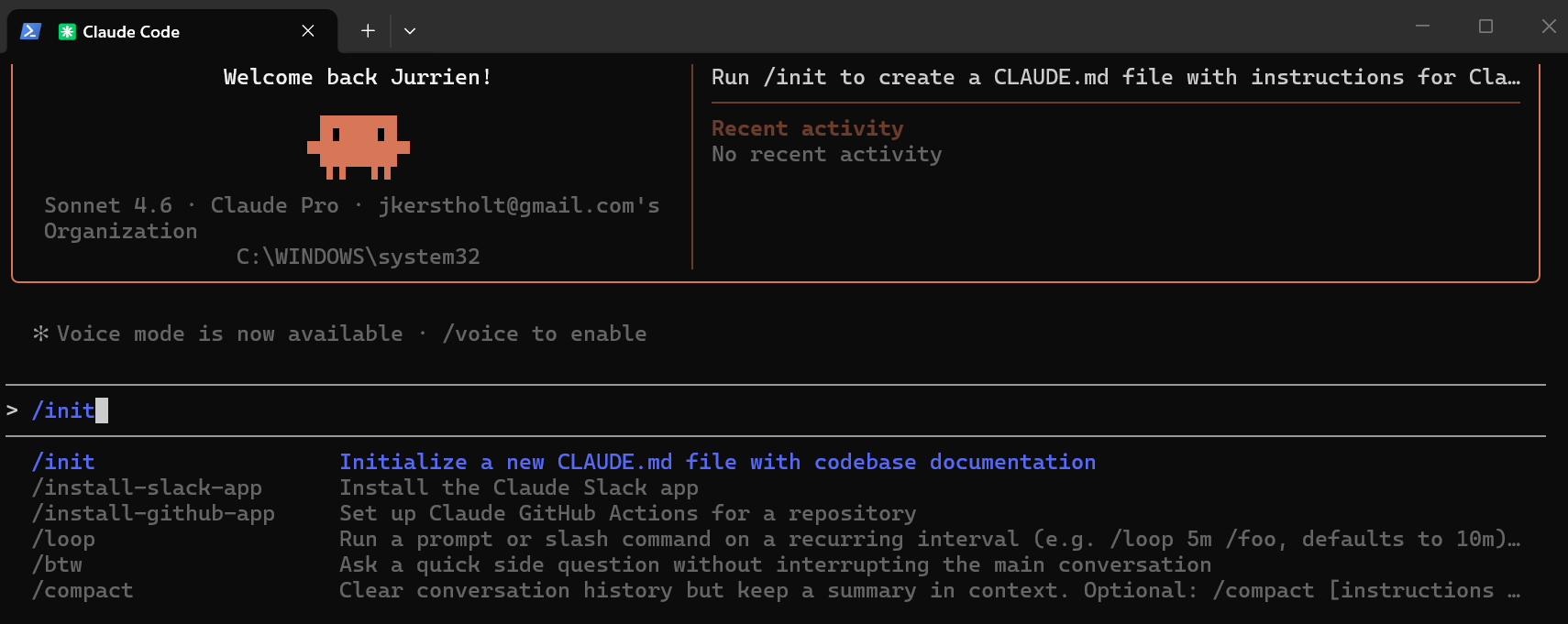
Claude Code is AI in your terminal. You work in your own local project environment — the same place where developers have been writing code for twenty years. You make a request, Claude reads your entire codebase, does what you ask, and you review. No GUI, no beautiful interface, just text and code.
A metaphor we often use: Lovable is a restaurant kitchen with a chef who cooks for you — you sit at the table and tell them what you want. Claude Code is a professional kitchen at your home with an experienced sous-chef who cooks along and does what you direct.
Both produce good food. Both deliver working software. But it's a different experience, different control, and a different user skill.
The Comparison in One Table
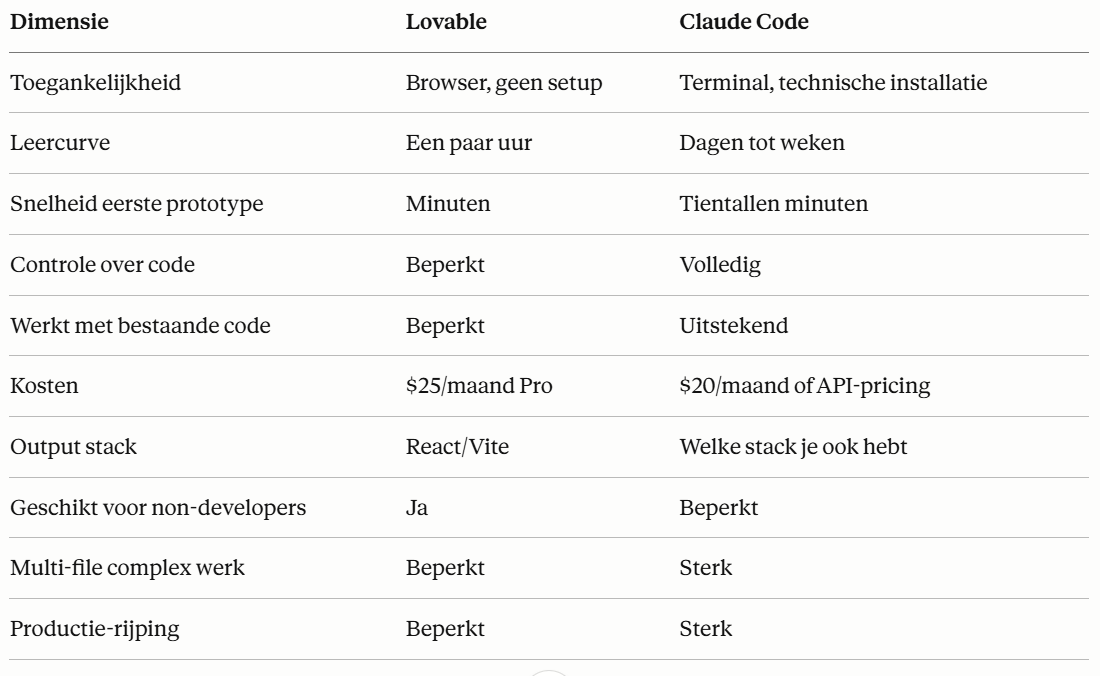
Lovable's biggest blind spot: working with existing codebases. It's designed to build something new from scratch. Claude Code's biggest blind spot: its learning curve, which makes it unsuitable for people who want to contribute without first brushing up their shell skills.
When to Choose Lovable?
Three situations where Lovable is clearly the right choice.
- Greenfield projects where speed matters. A new marketing site, an MVP for a product idea, an internal tool that didn't exist before. Lovable shows you in an hour if the concept works at all before you invest time or money in actual development. For management, this is valuable: you test ideas at a fraction of the usual cost.
- Visual iteration with the client. You're not sure what the interface should look like. In Lovable, management can click along, provide feedback, and see changes instantly. "Make that button bigger, move that section up, use our brand color." It works. With Claude Code, you're in a different frame — you have to run it first, refresh, take a screenshot, then go back to the meeting.
- Non-technical clients who want to take the lead themselves. Sometimes an entrepreneur or marketing manager wants to be hands-on without a week-long shell course. Lovable is accessible to them. For SMBs without a dedicated developer, this is the gateway to self-building.
When to Choose Claude Code?
Four situations where Claude Code wins.
- Modifications to existing software. Do you already have a Next.js webshop, a WordPress site, or a Python tool? Claude Code reads, understands, and adapts without you having to start from scratch. Lovable simply cannot do this — it's designed to generate new React apps, not edit existing systems.
- Multi-file refactoring. "Change how user authentication works across all pages." Claude Code does this with one prompt and a review step. In a GUI tool, this becomes a marathon of individual adjustments.
- Non-web work. Python scripts for data analysis, automation, API integrations, mobile apps, command-line tools, content pipelines. Claude Code is language- and stack-agnostic. Lovable is exclusively for React web apps.
- Production-level control. Writing tests, security checks, performance tuning, reading debug logs, setting up deploy pipelines. The type of work where you really need to be in the code. Claude Code is much stronger here because you work in your own IDE with your own tools — version control, testing frameworks, monitoring, dependency management.
The Truth Nobody Tells You: Use Both
In practice, it's rarely either-or. That's what we at High Performing Company have discovered in recent months, partly in our own projects, partly in building this website itself.
Our typical workflow:
- Lovable for the first 80%. We quickly generate a working version of the site or app, structure the pages, design the UI, and let the client review it in hourly iterations.
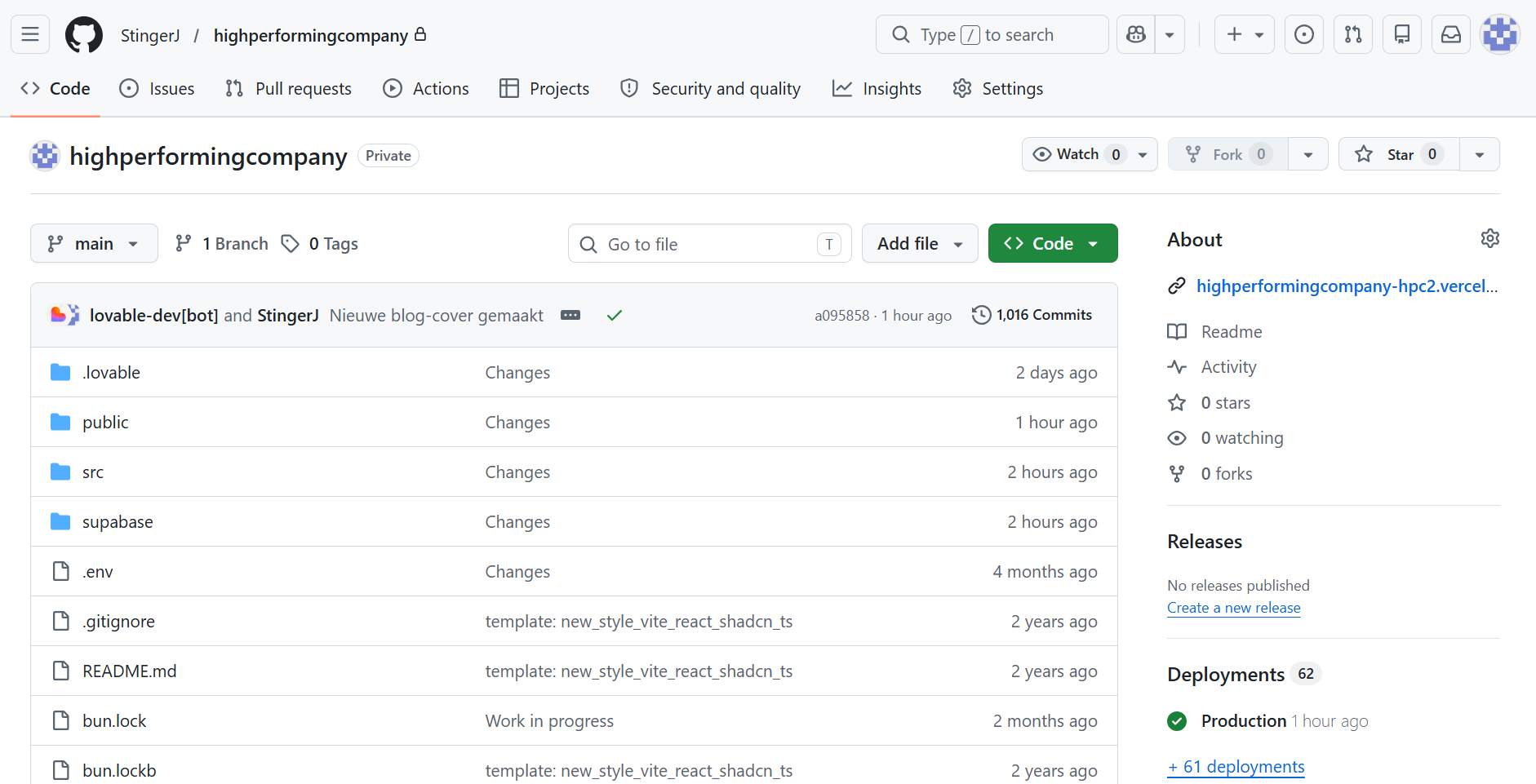
- GitHub export. Lovable has a button to push your code to your own repository. From that moment on, it's real source code, no longer a Lovable product.
- Claude Code for the last 20%. SEO fixes, schema markup, security review, performance optimization, hosting setup, integrations with external systems, production deployment.
Our own example: this website (highperformingcompany.com) was started in Lovable, exported to GitHub, and the final production refinement — including migration to Vercel hosting for correct canonicals, schema markup, and separate language sitemaps — was guided by Claude Code. Without Lovable, what took a few days would have taken three weeks. Without Claude Code, the site would still be encountering technical SEO issues.
What this means in the market: those who only use Lovable deliver prototypes that lack production readiness. Those who only use Claude Code are faster than a traditional dev-shop but lack the iteration speed Lovable offers in the first week. The combination is what makes the difference.
What This Means For You as a Client
For SMB executives and managers considering hiring an AI builder: ask specifically about tool choices and architecture. The answers say more than a portfolio.
Ask what tools they use and why. A builder who only mentions Lovable misses production readiness and likely delivers software that won't be maintainable in a year. A builder who only mentions Claude Code is probably more expensive than necessary for your project type during the prototyping phase.
Ask about GitHub ownership. Whoever you hire, you must ultimately own the source code. In your own GitHub organization. In Lovable-only setups, this sometimes doesn't happen automatically — explicitly ask for it.
Ask about the hosting strategy. A serious builder knows that Lovable's standard hosting is not production-grade. Vercel, Netlify, or a real cloud host should be the answer. If the builder says "we host everything on Lovable itself," you'll face problems with SEO, custom domains, and uptime in six months.
Conclusion
The question is not which tool to choose. The question is who knows the tools and when to use which one.
Lovable is a rocket for the initial prototype. Claude Code is a precision instrument for production-level work. Most serious AI projects use both — not because it's trendy, but because the combination solves the bottleneck each tool has individually.
For SMBs considering building with AI: don't choose a tool, choose an approach. And choose a partner who understands both worlds.
Considering building with AI, but unsure which approach suits your project? In half an hour, we'll look at a concrete issue from your organization together and discuss what an AI approach would yield — free and without obligation. Schedule a call.