
Vibe Coding for Entrepreneurs: Costs, Benefits, and Realistic Expectations
During a discussion with an e-commerce entrepreneur, we talked about Vibe Coding: "I hear about Vibe Coding and AI development everywhere. But what does it really cost me, and do I get anything of value back?"
Good question. And one I frequently get from clients considering taking the leap.
This article answers three things. What Vibe Coding is, and what it isn't. What it costs, with concrete figures for 2026. And when it will and won't work for you. No marketing story. Just what we see in practice with Dutch entrepreneurs who take the plunge.
What is Vibe Coding?
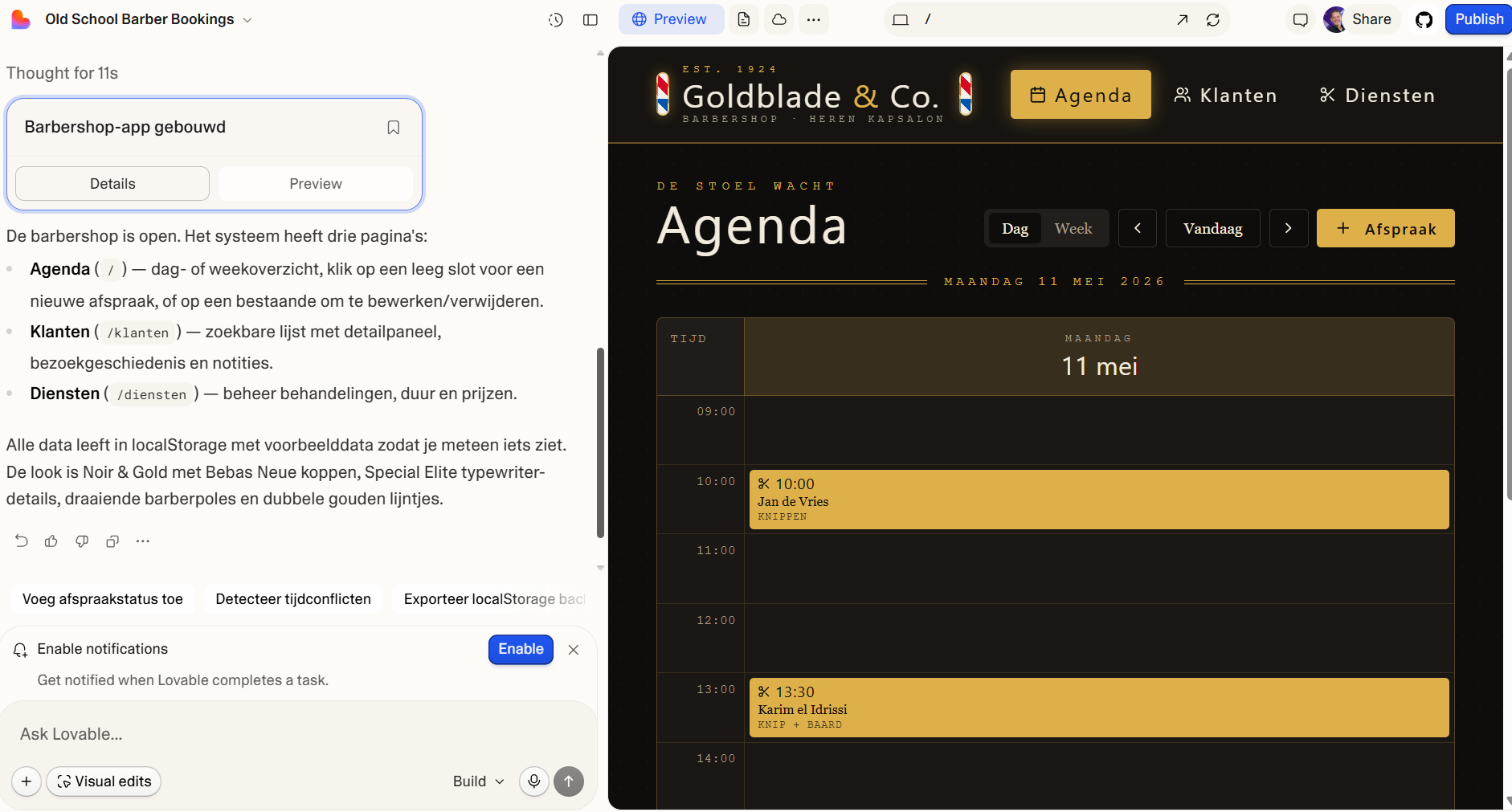
Vibe Coding is building software where you describe what you want in natural language, and an AI tool translates that intention into working code. You maintain control over what the product (e.g., an app, website, or webshop) should do. The AI does the heavy lifting of writing, refactoring, and connecting code.
What it is not: no-code. No-code platforms like Webflow or Bubble entice you into their ecosystem with associated limitations. With Vibe Coding, you get real source code in your own GitHub repository, free to export, modify, or have someone else further develop.
What it also is not: a replacement for experienced developers. It's another tool in the same toolbox. An experienced architect with an AI drawing board builds faster than a junior with traditional training. But without that architect, you build a house that starts to creak after three months.
What Does It Really Cost?
Here are concrete figures for 2026, based on what we pay monthly for tools and see in projects.
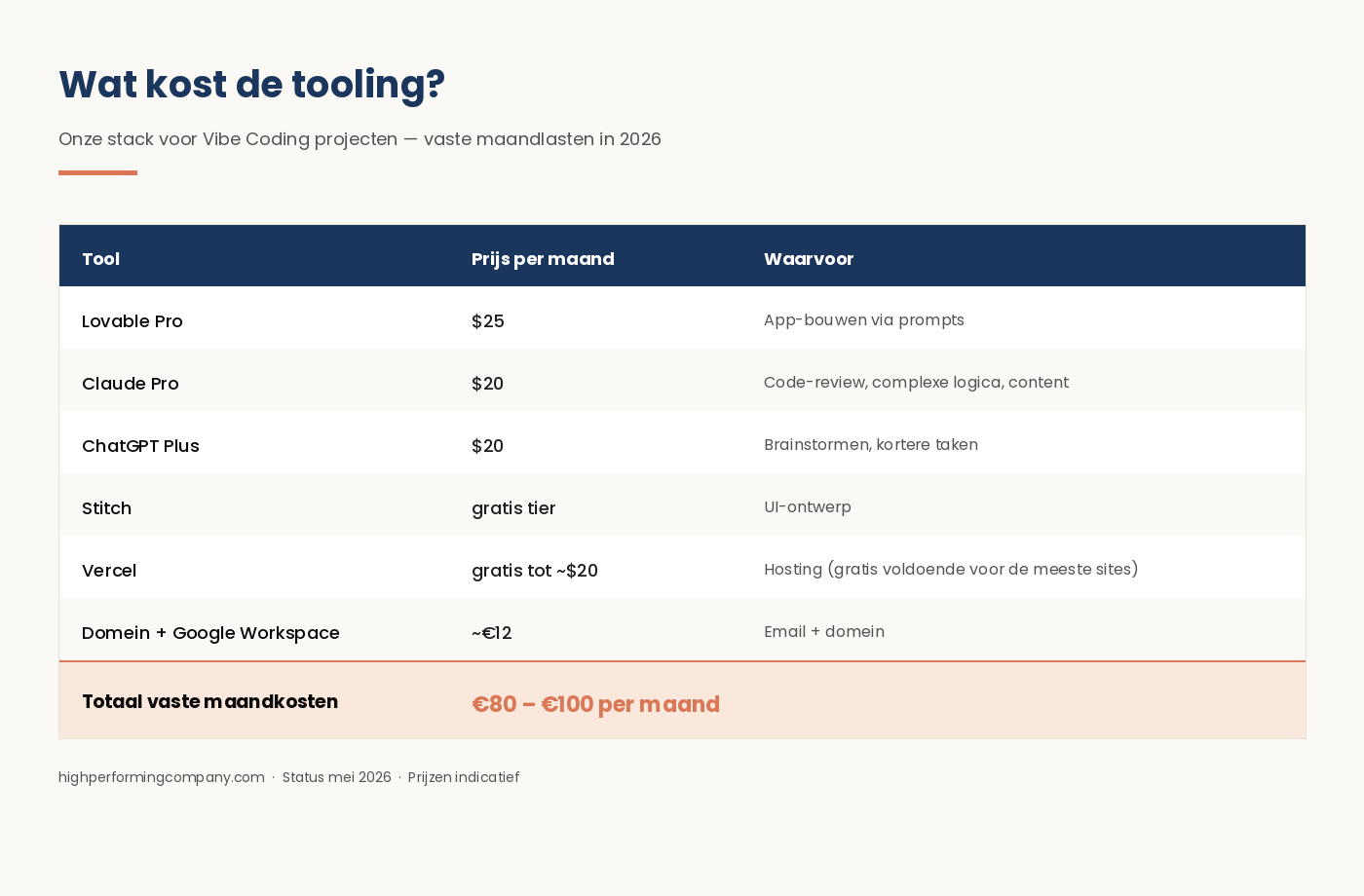
For many entrepreneurs, this is less than one license for a traditional design or dev tool. For an entrepreneur who needs a marketing site, landing page, or internal dashboard once a quarter: recouped in the first project.
Project Costs — What a Real Build Costs
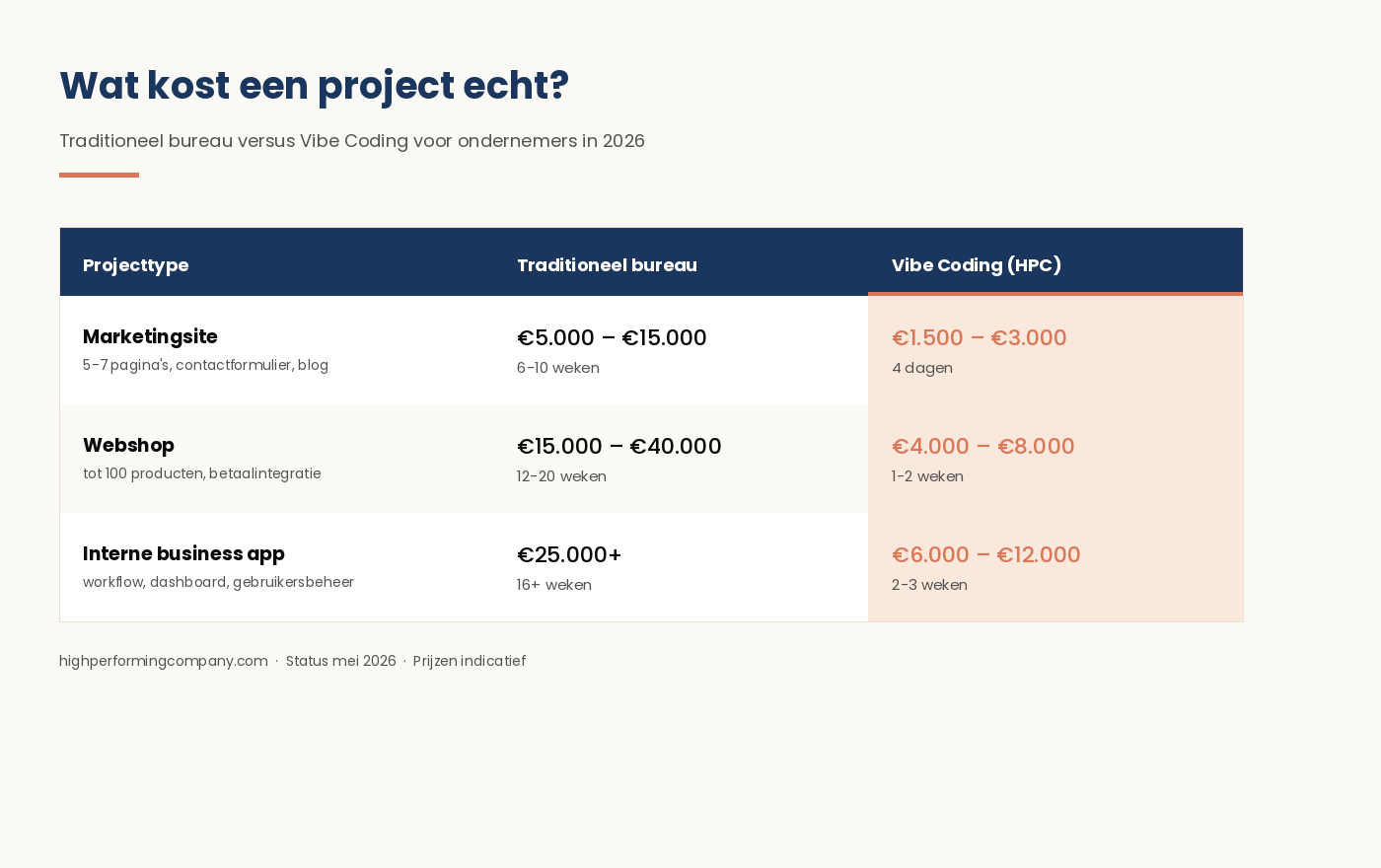
This is where the difference becomes painfully clear. Our average prices versus what we see in old quotes from clients:
What Are the Benefits?
Three types of value, in order of impact for entrepreneurs.
- One: speed to market. An idea that normally lingers in a quote phase for three months can be tested with a working prototype within a week. For entrepreneurs who rarely have the luxury of a large R&D budget, this is fundamentally different. You invest €3,000 to discover if an idea works at all — instead of spending €30,000 to develop it only to find out the market doesn't want it.
- Two: speed of iteration. With a traditional agency, 'move that button one centimeter to the right' is a ticket, a plan, a two-week wait, and an invoice. With Vibe Coding, it's two hours, done, live. That changes how you think about your product. Instead of striving for perfection at the beginning, you work in build-measure-learn cycles. Just as tech companies have been doing for years.
- Three: ownership. You get the complete source code in your own GitHub repository, your own domain, your own accounts. No vendor lock-in. If the relationship with the builder changes, another developer can take over. This is not the case with no-code platforms. Nor with many traditional agencies — even if they claim otherwise.
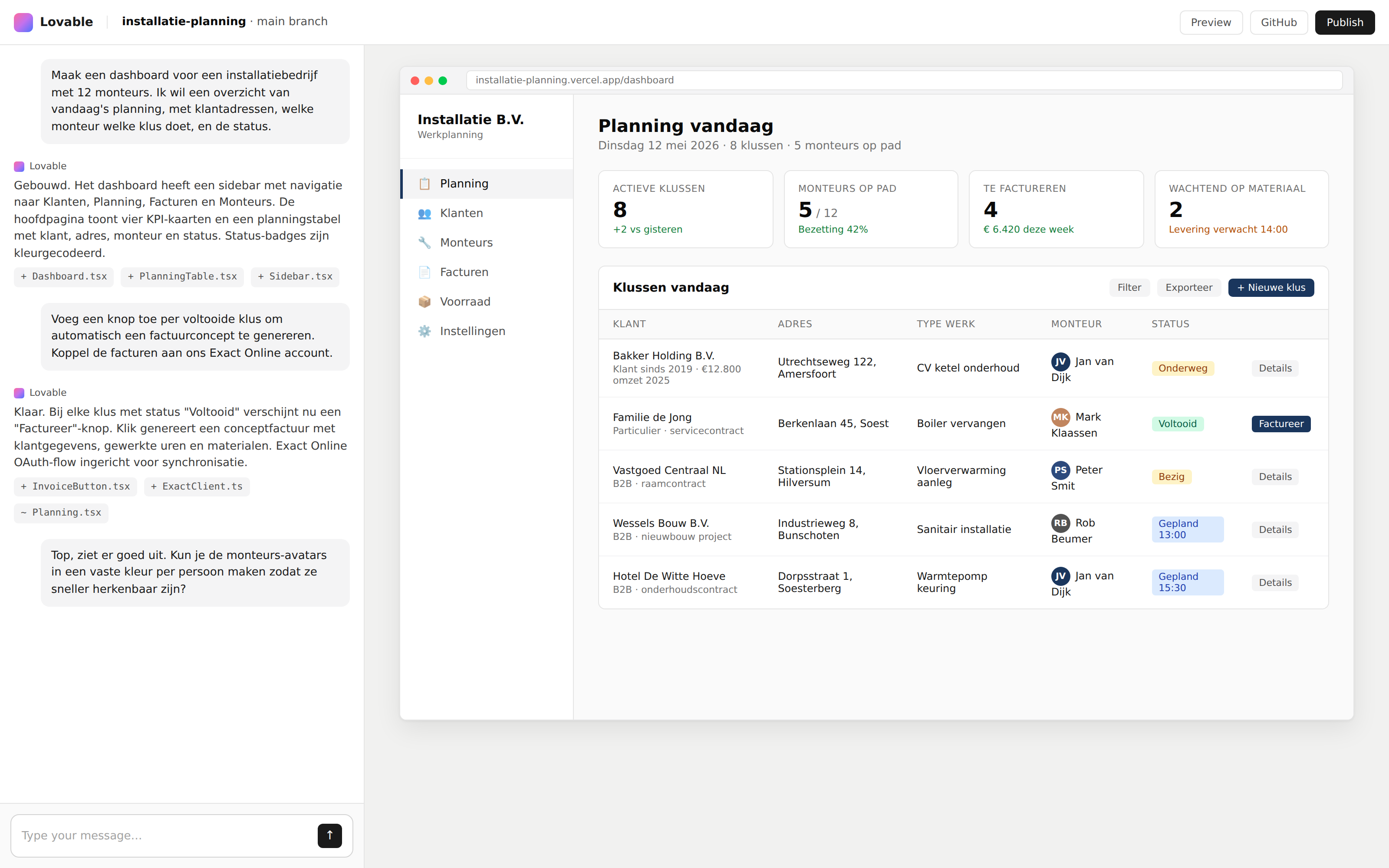
An installation company with 12 technicians had been working with Excel spreadsheets for customer routes and invoicing for years. Two people spent half a day each week manually transcribing between files. A traditional quote for a planning system: €23,000, delivery in 14 weeks.
We built a working internal app in four days: customer overview, route planning, automatic invoice draft generation, integration with their accounting package. Investment: €9,500. Their payback period: seven weeks.
Not because we're smarter than a traditional dev-shop. Because the tools have changed, and we know which ones to use for which type of problem.
When is Vibe Coding NOT for you?
Highly regulated industries. Do you work with patient records in healthcare, financial transactions in a bank, or insurance policies with legal implications? Then every line of code must be traceable, auditable, and certified. Vibe Coding cannot deliver this at the level regulators demand. For these cases, choose traditional development with formal review processes.
Heavy legacy integrations. Do you have a SAP implementation from 2008 that your AI tool needs to access? Or an on-premise database with its own protocol? Vibe Coding tools work best with modern, documented APIs. For legacy connections, you need an experienced integration specialist. Not a prompt.
Complex domain logic. A logistics planning system with 200 business rules about routing, capacity, and tariff structures? You won't get that to work via prompts. That requires a team that understands the problem in depth. Vibe Coding can then help with the UI and parts of the implementation, but not with the core of the system.
Significant scalability. 10,000+ concurrent users with sub-100ms latency on complex queries? Then you need performance engineering. AI-generated code is generally not optimized for extreme scale; an experienced backend engineer is needed for database-level tuning.
The simple rule: Vibe Coding is a rocket for the first 80% of what most entrepreneurs need. For the last 20%, you choose a different route.
How Do You Start?
Three steps, in this order.
- One: choose one concrete problem. Something you've put off for months because it would be "too expensive" to outsource. An internal tool that currently lives in Excel. A marketing site from 2019. A process that costs six people half an hour every day. Write down in two sentences what the problem is and what your solution should do.
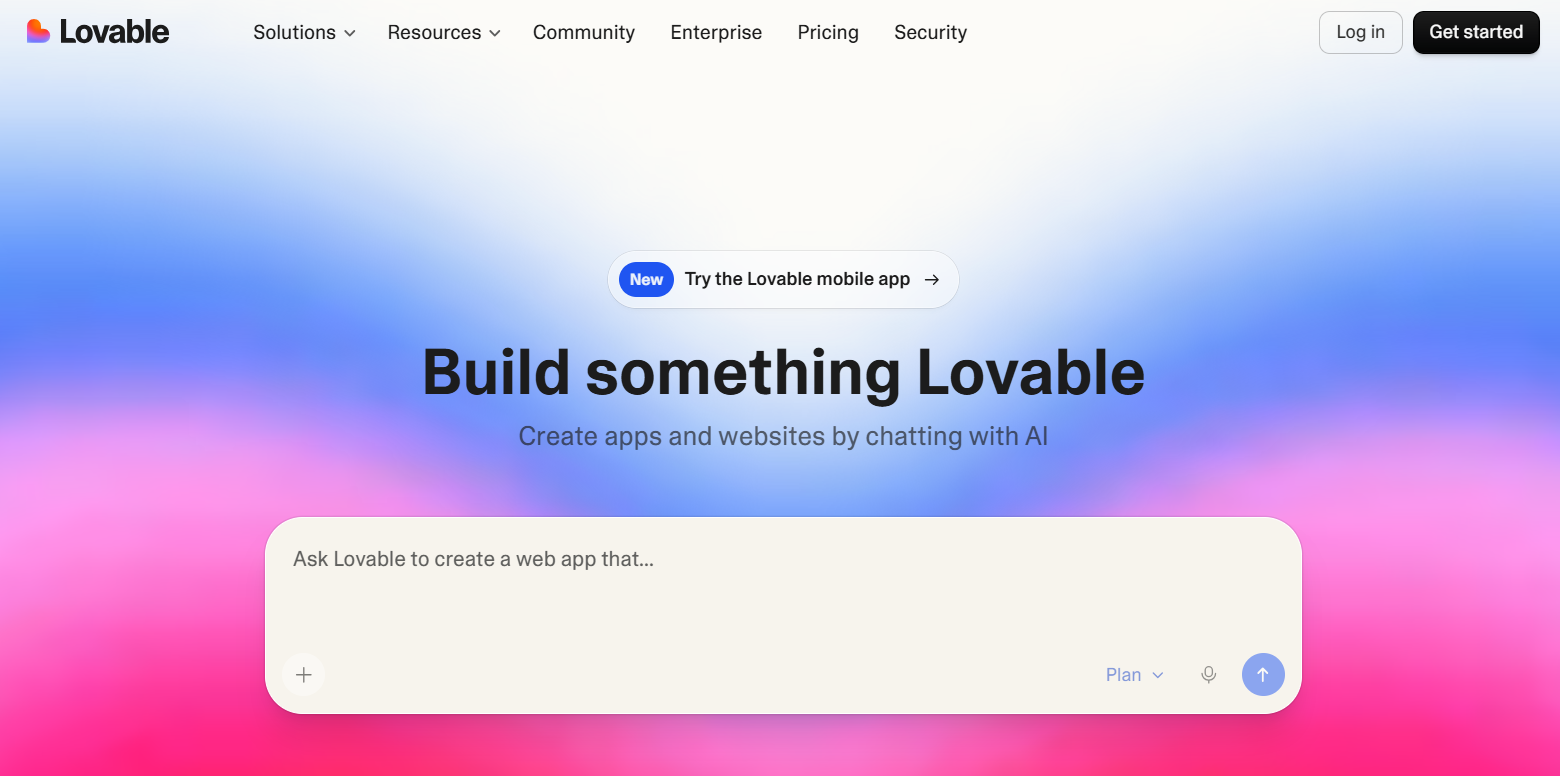
- Two: experiment yourself for two hours. Go to lovable.dev, create a free account, and try to build something simple. Not to deliver production-ready work but to get a feel for what the tool can do and its limitations. This is the most important investment decision you can make in this process: having experienced the tool yourself before hiring someone.
- Three: hire someone to guide the process. One day with an experienced guide saves two weeks of fumbling around yourself. Not because you're unintelligent, but because the production phase (architecture, security, hosting, deployment) requires different knowledge than the prompt phase. What AI makes fast is not automatically ready for production.
Conclusion
Vibe Coding is no longer just a hype. It's a practical way to build in a week what traditionally took a quarter. Provided you use it for the right projects and with the right guidance. For most entrepreneurs, this means ideas that always seemed "too expensive" are suddenly within reach.
The biggest mistake I see now: entrepreneurs waiting until they "fully understand AI" before they start. That moment won't come. The way to learn it is by tackling a concrete problem and seeing what comes out.
Considering getting started with Vibe Coding, but not sure where to begin? In half an hour, we can look at a specific issue from your organization and discuss what a Vibe Coding approach would yield, free and without obligation. Schedule a meeting.